TSW

Tim Sterne-Weiler PhD

Senior Principal Scientist
Computational Biology & Translation
Discovery Oncology · Genentech

  • PhD Sanford Lab — UCSC Genomics
  • Postdoc Blencowe Lab — UToronto
  • Now Cancer Dependencies — Genentech

I lead an interdisciplinary Cancer Dependencies Team focused on identifying cancer vulnerabilities and biomarkers for target discovery. We develop and apply interpretable machine learning and AI architectures to multimodal genomics data.

My team develops and applies computational methods to study cancer biology and identify new therapeutic targets, spanning AI models and single-cell transcriptomics. By integrating functional and clinical genomics data, we investigate the genetic alterations and perturbations that drive cancer cell states and vulnerabilities. We also engage in target assessment and early-pipeline projects within Discovery Oncology.

Current research

Oncoforest — interpretable machine learning for cancer dependencies

Oncoforest is a set of machine learning tools for enhanced interpretability, suitable for discovery and assessment of cancer vulnerabilities — a toolkit designed for biologically interpretable prediction of viability readouts and their association with molecular context.

hover a node, or a module label
Oncoforest attributes gene dependency to molecular context. Impactful features group into modules — KEGG pathway, paralog, protein–protein interaction and cytoband — arranged from gene loss- to gain-of-function. Mondo et al. 2025

Translational atlas of cancer dependencies

Interpretable models trained in cell lines can be applied to harmonized multi-omic maps of tumours and normal tissue. This directly enables forward and reverse translation.

Predictions identify known tissue and cell-type sensitivities from therapeutic intervention, and stratify patient outcomes.

hover a population

A harmonized map places cancer cell lines, tumours and normal tissue in one space. Models trained on the cell lines are applied across the map. Schematic.
Methods foundation

Open-source methods developed for RNA and isoform biology, covering transcript discovery and quantification, alternative splicing, and RNA duplex structure. Several remain in active use.

Isosceles

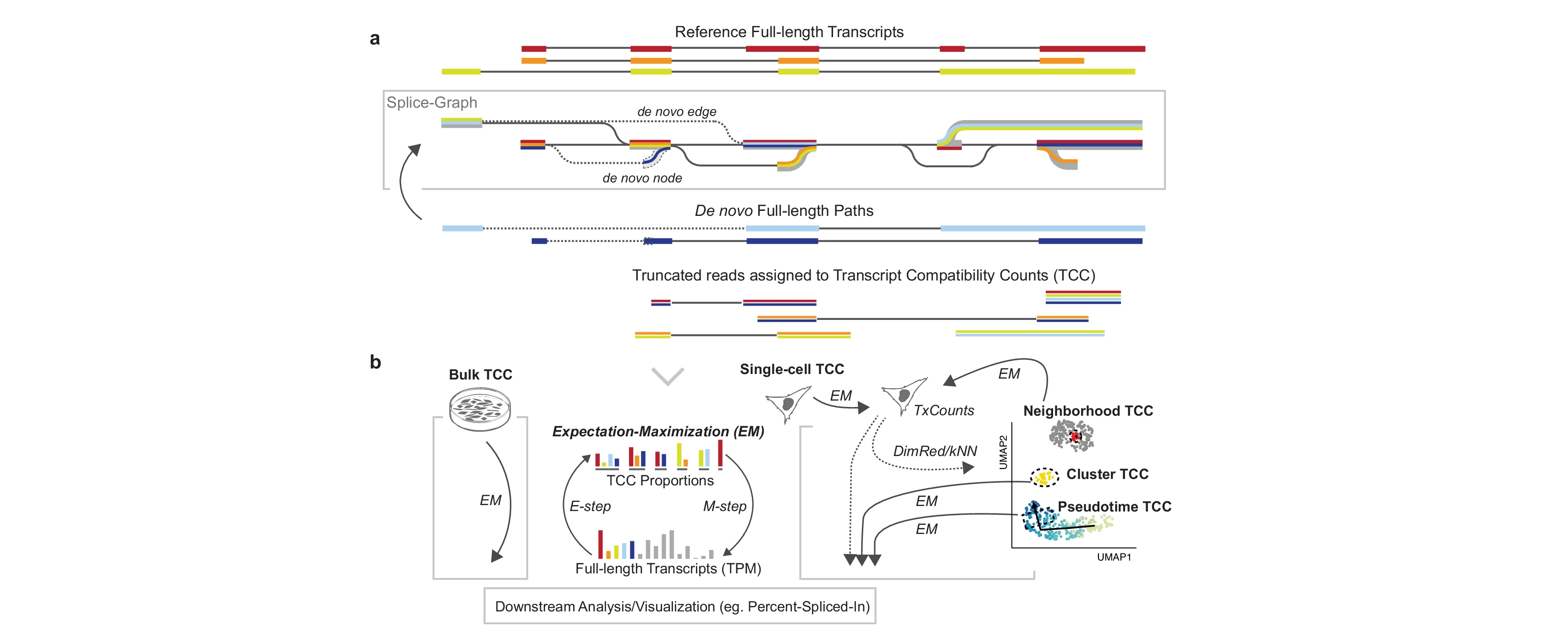
Transcript discovery and quantification from long reads, at single-cell, pseudo-bulk and bulk resolution.

Nat Commun 2024

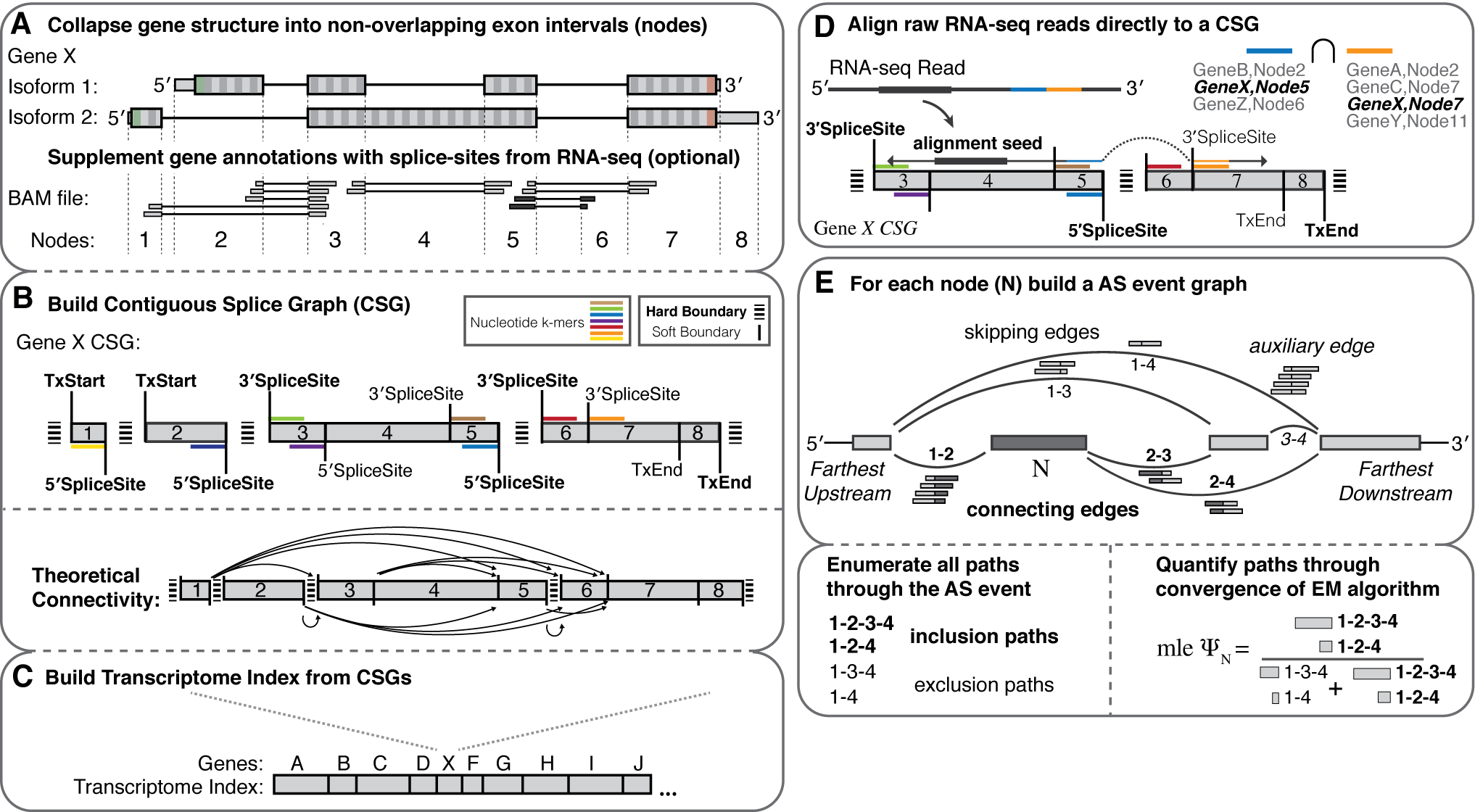
Whippet.jl

Event-level quantification of alternative splicing from RNA-seq.

Mol Cell 2018 GitHub

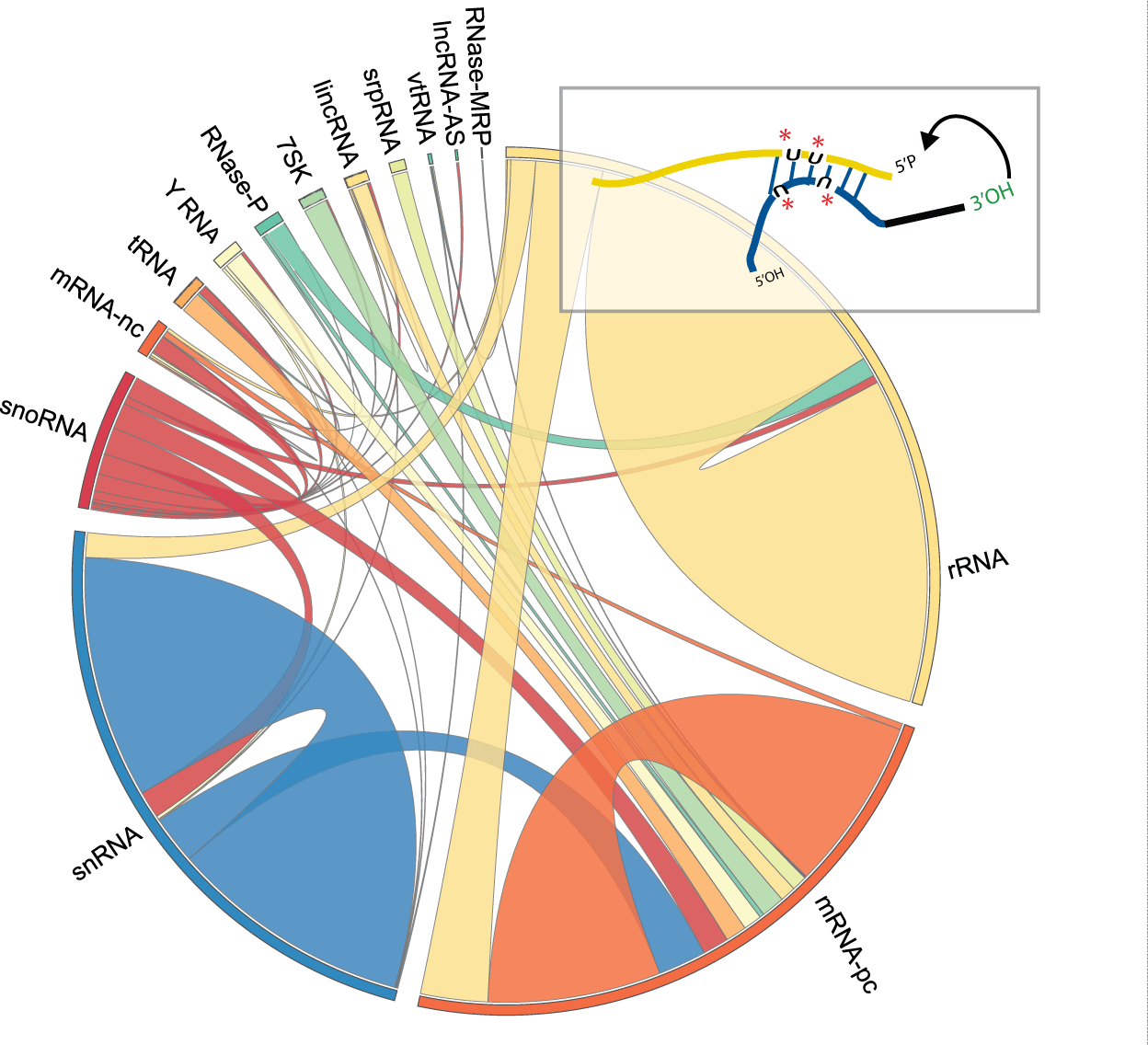
LIGR-seq

Transcriptome-wide mapping of RNA:RNA interactions in vivo.

Mol Cell 2016

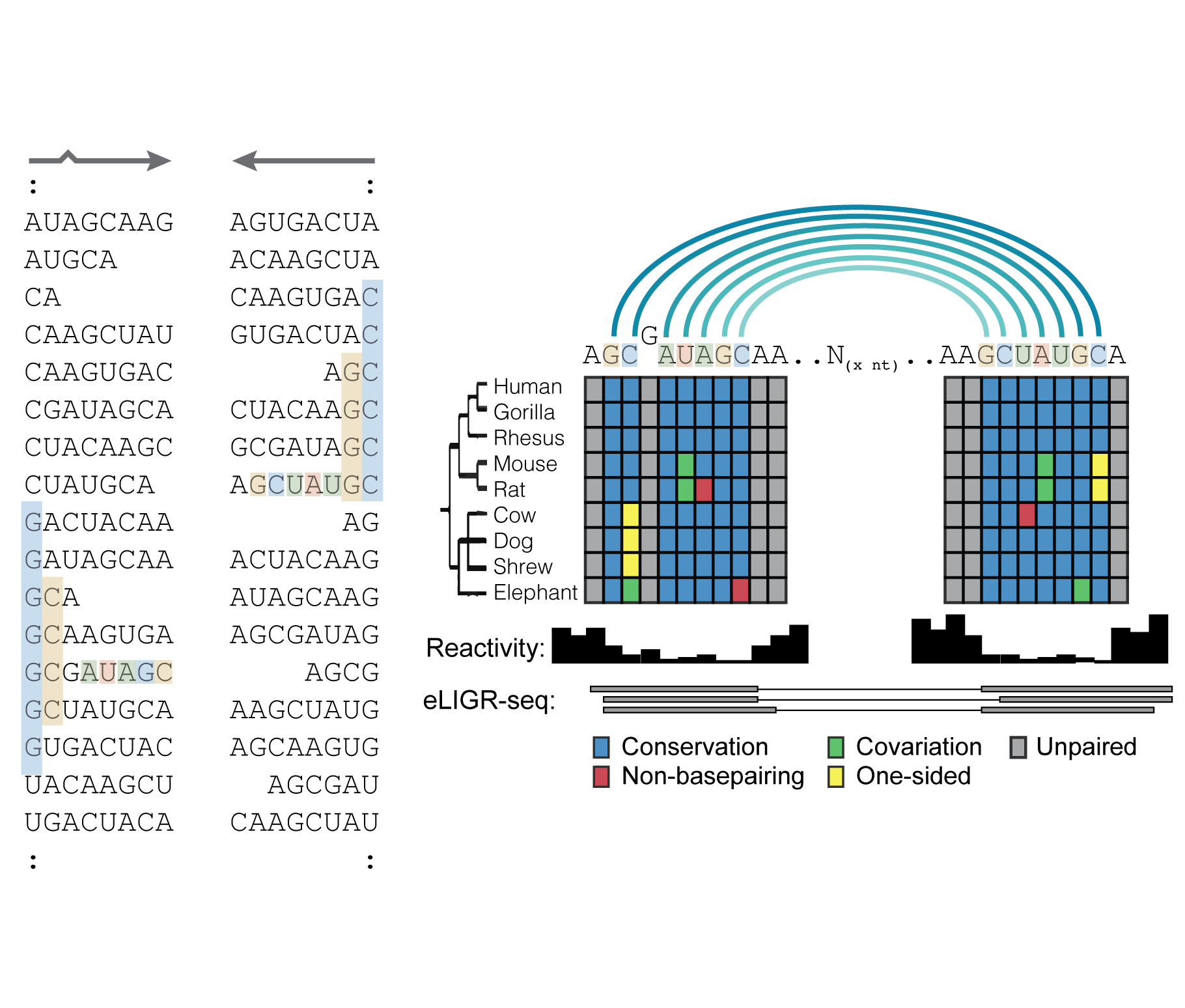
EvoDuplexes.jl

Folding of local and long-range RNA duplexes with phylogenetic analysis.

GitHub

Publications
About
Tim Sterne-Weiler

Education

  • Postdoctoral Fellow — Donnelly Centre, University of Toronto2018 · Blencowe Lab
  • PhD, Bioinformatics — UC Santa Cruz2014 · Sanford Lab
  • MS, Bioinformatics — UC Santa Cruz2011
  • BS, Bioinformatics with Honors — UC Santa Cruz2007 · Baskin School of Engineering

Awards

  • CIHR Postdoctoral Fellowship2015
  • Charles H. Best Postdoctoral Fellowship2014

Contact

Postdoctoral mentoring. A postdoctoral fellowship is an ideal period to develop scientific independence in hypothesis-driven research. It demands creativity to formulate new hypotheses, rigorous design of models and experiments, and a strategic vision to contextualize work within the broader literature. As a mentor, I create an environment with space for independent growth while providing the guidance and support necessary for the success and career development of a postdoctoral fellow.